HSE Management Systems
Develop, implement and maintain robust health, safety and environmental management systems tailored to offshore operations.
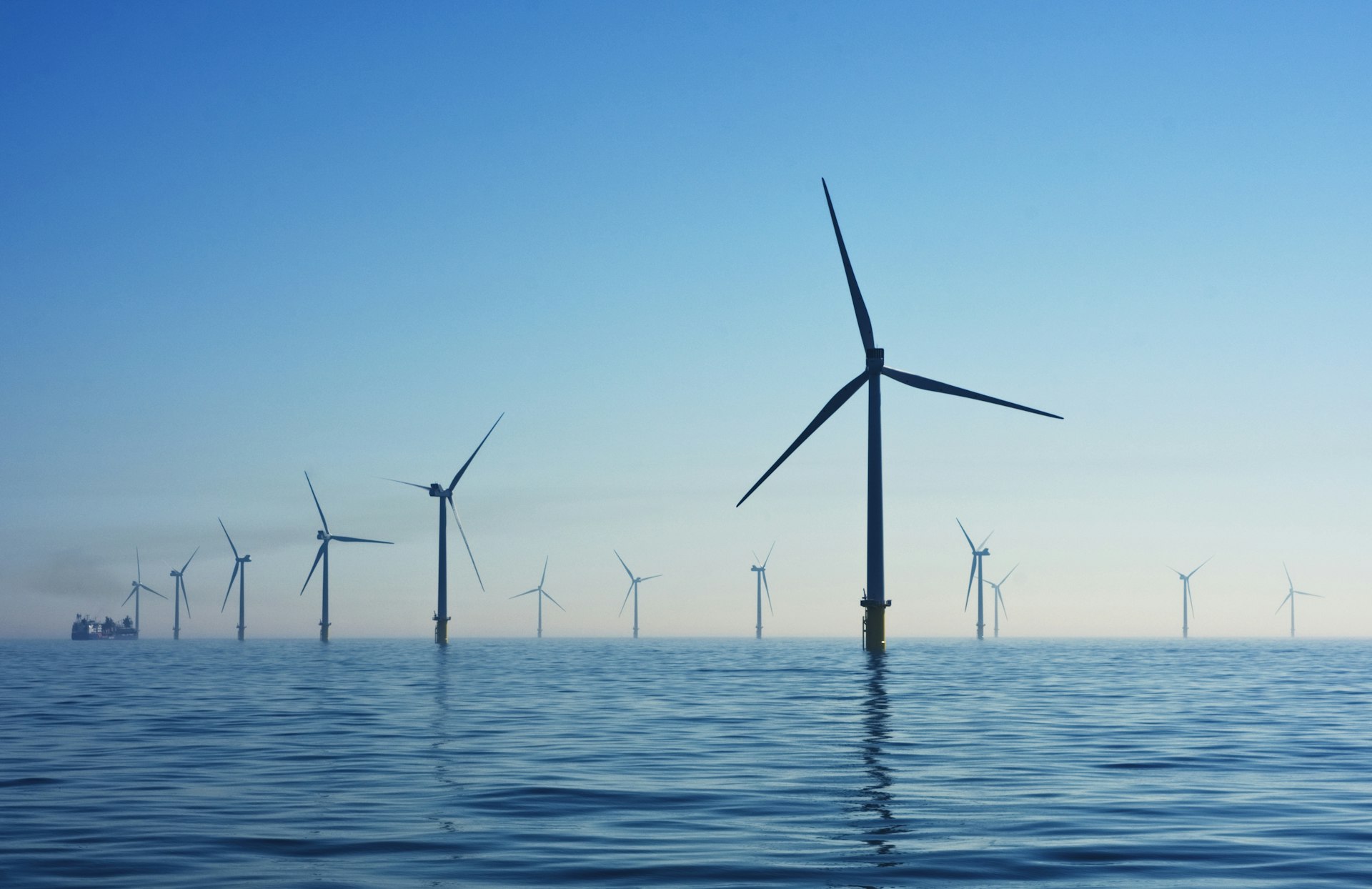
Ireland's Offshore Safety Specialists
Pragmatic, commercially focused QHSE solutions tailored to the development, construction, and enabling works phases of Ireland's offshore renewable projects. With a national target of 5 GW offshore wind capacity by 2030 and 37 GW by 2050 (Government of Ireland Climate Action Plan), the need for specialist safety leadership has never been greater.
5 GW
Ireland's 2030 Offshore Target
PSDP
& PSCS Qualified
33%
Wind in Ireland's Electricity
€38bn
Projected Economic Value
What We Do
We support clients across the full project lifecycle with practical, commercially focused health, safety, and environmental solutions.
Develop, implement and maintain robust health, safety and environmental management systems tailored to offshore operations.
Comprehensive risk assessments and method statements for all phases of offshore renewable development.
Ensure full compliance with Irish regulatory requirements and international industry best practice.
End-to-end contractor and supply chain safety management, audits, and performance reviews.
Crisis and incident management planning, response frameworks and business continuity support.
Sustainability and environmental strategy development aligned with offshore renewable objectives.
Industry Focus
Operating in one of the most highly regulated and high-risk environments, we combine deep technical expertise with a strong understanding of the unique challenges in offshore wind and marine energy developments.
"Offshore renewable projects — including wind farm developments and marine construction — operate in environments where multiple contractors' workers may share installations, relying on shared evacuation systems and exposed to each other's operations, demanding sophisticated safety coordination arrangements far exceeding minimum legal requirements."
Common Questions
Offshore Safety Services provides specialist QHSE (Quality, Health, Safety and Environmental) consultancy for the offshore renewable energy sector. Services include HSE management systems aligned with ISO 45001 and ISO 14001, risk assessments and method statements, regulatory compliance and assurance, contractor and supply chain management, PSDP and PSCS appointment, internal and supplier audits, crisis and incident management, sustainability and environmental strategy, and offshore-specific training programmes.
Offshore Safety Services is based in Ireland and operates across Ireland and Europe. Our primary focus is supporting Ireland's offshore renewable energy sector. Under the Climate Action Plan, Ireland has a government target of 5GW of installed offshore wind capacity by 2030, 20GW by 2040, and 37GW by 2050 — representing one of the most significant infrastructure programmes in the country's history (Government of Ireland, Future Framework for Offshore Renewable Energy, May 2024).
Under the Safety, Health and Welfare at Work (Construction) Regulations 2013 (S.I. No. 291 of 2013), all construction projects in Ireland require the appointment of a Project Supervisor for the Design Process (PSDP) and a Project Supervisor for the Construction Stage (PSCS). The Health and Safety Authority (HSA) provides guidelines confirming these statutory roles ensure safety is embedded from the earliest design stages through to construction completion. Offshore renewable projects — including wind farm developments and marine construction — are subject to these regulations, making qualified PSDP and PSCS appointment a legal requirement for project delivery.
We provide QHSE support across the full project lifecycle. This includes Phase 1 development (safety case development, environmental impact assessment support, stakeholder engagement), offshore wind enabling works (site investigation, geotechnical surveys, cable routing and onshore grid connections), and marine and nearshore construction (vessel operations, harbour works, nearshore construction risk management). End-to-end coverage ensures safety management continuity throughout the project.
Offshore renewable energy projects operate in one of the most highly regulated and technically complex environments in construction. Effective safety management requires specialist knowledge of marine operations, offshore wind hazards, Irish regulatory requirements including PSDP and PSCS obligations under the Safety, Health and Welfare at Work Act 2005 and the Construction Regulations 2013, and international best practice standards. As noted by William Fry, Ireland's offshore wind sector demands "sophisticated safety coordination arrangements far exceeding minimum legal requirements" due to multiple contractors sharing offshore installations with shared evacuation systems. A specialist offshore safety consultancy understands these unique stakeholder, regulatory, and operational challenges — bridging the gap between compliance, operational delivery, and commercial realities in ways that generalist health and safety consultants cannot.
According to the Government of Ireland's Future Framework for Offshore Renewable Energy (May 2024), meeting Ireland's 2050 offshore wind energy targets could contribute at least €38 billion to the economy and generate an estimated €69 billion in Gross Value Added (GVA) over project lifetimes. The South Coast Designated Maritime Area Plan (SC-DMAP) alone is projected to deliver €4.4 billion in GVA and 49,000 full-time equivalent years of employment to the Irish economy (BVG Associates, SC-DMAP Regional Economic Analysis, May 2024).
As confirmed by Minister Darragh O'Brien at the Wind Energy Ireland Offshore Wind Conference (May 2025), all five Phase One offshore wind projects, totalling over 3 GW of awarded capacity under ORESS 1, have now submitted planning applications to An Bord Pleanála. Work has commenced on Ireland's National Designated Maritime Area Plan (DMAP) to accelerate site designation. In December 2025, a joint venture between ESB and Ørsted won the ORESS Tonn Nua auction for a 900 MW offshore wind farm off the south coast — enough to power nearly one million homes (EirGrid, December 2025). Wind currently provides 33% of Ireland's electricity, making Ireland second in Europe for wind energy and third globally for installed wind capacity per capita (WindEurope, June 2025; Climate Action Plan 2025).
Health and safety on offshore wind construction projects in Ireland is governed by the Safety, Health and Welfare at Work Act 2005 (as amended) and the Safety, Health and Welfare at Work (Construction) Regulations 2013 (S.I. No. 291 of 2013). The Health and Safety Authority (HSA) serves as Ireland's national regulator with jurisdiction extending to offshore renewable energy installations within Ireland's territorial waters and continental shelf. Additional regulations including the General Application Regulations 2007 cover specific hazards such as work at height, confined spaces, and electrical safety relevant to offshore operations.
"Our approach combines deep technical expertise with a strong understanding of the stakeholder, regulatory, and operational challenges unique to offshore wind and marine energy developments. We bridge the gap between regulatory compliance, operational delivery, and commercial realities."
Ireland's offshore wind sector already supports over 5,000 jobs (Government Powering Prosperity Strategy) and is projected to require up to 4,200 FTE positions annually by 2030 (BVG Associates for Government of Ireland). We are committed to helping this sector grow safely, responsibly, and sustainably — providing clear advice, robust systems, and confident leadership where safety and compliance are critical to project success.
Start a Conversation